
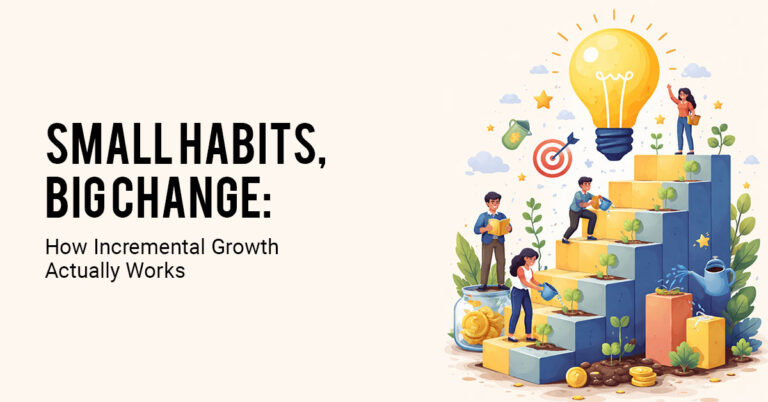
Personal growth is often portrayed as a dramatic transformation. We imagine breakthrough moments, bold decisions, and sweeping life changes. While those moments exist, they are not how most growth actually happens. Real, lasting change is quieter. It builds through small actions repeated over time.
Behavioral science confirms this. Habits shape identity, and habits are formed through repetition, not intensity. When an action is small enough to repeat consistently, it becomes part of who you are. Twenty minutes is a powerful unit because it supports repetition without burnout.
Incremental growth works because it aligns with how the brain learns. Each time you repeat a behavior, neural pathways strengthen. This process, known as neuroplasticity, allows the brain to adapt. The more often a behavior is repeated, the less effort it requires. What once felt difficult becomes automatic.
This is why large, demanding changes often fail. They rely on willpower, which is finite. Small habits rely on systems. Systems remove the need for constant motivation. They create predictability, and the brain thrives on predictability.
Consider how small habits compound. Twenty minutes of reading each day equals over one hundred hours per year. Twenty minutes of movement strengthens the cardiovascular system over months. Twenty minutes of focused work builds skills that appear effortless from the outside.
The key is not speed. It is a direction. Incremental change ensures you are moving forward without overwhelming your nervous system. Stress decreases when progress feels manageable. Confidence increases when success is repeatable.
Another advantage of small habits is resilience. Missing one day does not derail the process. There is no all-or-nothing failure. You simply return to the next twenty minutes. This flexibility makes growth sustainable.
Small habits also reduce guilt. When goals are realistic, they invite participation instead of avoidance. Over time, participation becomes identity. You stop trying to change and start living differently.
Big change is not built in grand gestures. It is built with quiet consistency. Twenty minutes at a time is how momentum becomes mastery.