
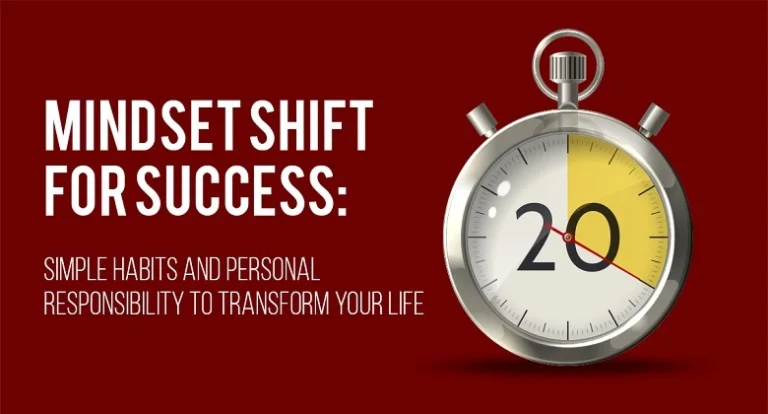
Do you feel overwhelmed by long to-do lists and endless tasks, thinking success requires hours of effort? The truth is, real transformation often starts in just 20 minutes a day. Many people believe success requires a dramatic change in routines, strict schedules, or radical lifestyle transformations. But real personal growth rarely happens through sudden breakthroughs. Instead, it develops through small, consistent actions that gradually reshape how we think and behave.
A mindset shift begins when individuals accept personal responsibility and growth for their daily choices. Rather than blaming circumstances, successful people focus on what they can control: their habits, attitudes, and responses to challenges. Over time, these small shifts compound into meaningful transformation.
One powerful concept that highlights this principle comes from the book The Power of 20: A Nobody’s Theory by Marcy Schneider. The book proposes a simple but powerful idea: meaningful change does not require hours of effort or a complete life overhaul. Instead, dedicating just 20 intentional minutes to positive actions each day can create lasting improvement in areas such as productivity, health, relationships, and mental clarity.
This philosophy reinforces an important truth: personal success is not about doing more, but it is about doing what matters consistently.
In this article, we will explore how adopting a responsibility-driven mindset and implementing small daily habits can transform your life. From self-awareness to resilience and consistency, these practical strategies will help you create lasting personal growth.
Building Self-Awareness: The First Step to Change
Before anyone can change their life, they must first understand their current habits and behaviors. Self-awareness is the foundation of personal growth because it allows individuals to recognize patterns that either support or hinder their goals.
Track Your Daily Patterns
One of the simplest ways to build self-awareness is through daily reflection.
Spend five minutes each evening asking yourself three questions:
- What did I do well today?
- What could I improve tomorrow?
- What distracted me from my priorities?
Writing these reflections in a journal helps you identify recurring patterns. Over time, you may notice habits such as procrastination, distraction, or inefficient work routines.
For example, someone who frequently misses deadlines may discover through reflection that they start tasks too late or become overwhelmed by large projects.
Once the pattern becomes visible, change becomes possible.
Identify Your Automatic Reactions
Many people react automatically to stress or challenges. They blame circumstances, other people, or bad luck.
However, developing a success mindset requires replacing automatic reactions with intentional responses.
Instead of saying:
- “This project failed because my team was not organized.”
Try asking:
- “What could I have done differently to improve the outcome?”
This subtle shift builds accountability and encourages problem-solving.
Real-Life Example
Imagine a professional who constantly feels overwhelmed at work. Through journaling, they realize their stress begins when tasks pile up.
Rather than avoiding the work, they begin breaking projects into smaller steps and dedicating 20 focused minutes at a time, a strategy aligned with the philosophy presented in The Power of 20: A Nobody’s Theory.
Gradually, the sense of overwhelm disappears because the work becomes manageable.
Self-awareness turns vague frustration into clear opportunities for improvement.
Owning Your Results: The Power of Personal Responsibility
One of the most powerful mindset shifts occurs when people stop blaming circumstances and start owning their outcomes.
Personal responsibility does not mean blaming yourself for everything that goes wrong. Instead, it means recognizing that your responses and decisions shape your future.
Replace Excuses with Ownership
Many excuses sound harmless:
- “I didn’t have time.”
- “The timing wasn’t right.”
- “The opportunity never came.”
But these statements shift responsibility away from ourselves.
Successful people ask different questions:
- “How could I have used my time better?”
- “What preparation could I improve?”
- “What opportunity can I create for myself?”
This mental shift transforms passivity into action.
Adopt the “Solution-First” Habit
When problems arise, many people focus on discussing the issue rather than solving it.
A more productive habit is to write down three possible solutions before raising the problem with others.
This approach trains your brain to become solution-oriented.
For example:
Problem: Productivity is declining in a team.
Possible solutions:
- Reorganize daily priorities.
- Introduce shorter, focused work sessions.
- Improve communication between team members.
Instead of complaining, the discussion becomes constructive.
Example: Leadership Accountability
Consider a manager who blames constant workload for missed deadlines.
Once they accept responsibility, they begin restructuring the team’s workflow, delegating tasks effectively, and scheduling focused work blocks.
Within weeks, productivity improves, not because circumstances changed, but because leadership behavior changed.
Responsibility empowers change.
Small Daily Habits That Rewire Your Thinking
Large goals often feel intimidating. People can rather build simple habits for better living, such as writing a book or launching a business, to develop a sense of consistency.
However, big results often come from small daily habits.
This concept is central to the philosophy behind The Power of 20: A Nobody’s Theory, which emphasizes the power of short, intentional effort periods to build lasting habits and reduce stress.
Start With a 10-Minute Morning Routine.
Instead of starting your day by checking emails or social media, take ten minutes to clarify your priorities.
Write down three important tasks for the day.
This simple habit provides clarity and prevents reactive behavior.
For example:
Morning priorities:
- Complete a key project milestone
- Exercise for 20 minutes
- Read 10 pages of a professional development book
With clear priorities, the day becomes focused.
Practice One Deliberate Improvement Daily
Commit to improving one small aspect of your life each day.
Examples include:
- Learning a new skill for 15 minutes
- Organizing a cluttered workspace
- Writing a thoughtful message to strengthen a relationship
These improvements may seem minor, but their long-term impact is enormous.
Use Habit Stacking
Habit stacking means attaching a new habit to an existing routine.
Examples:
- Reflect on goals while drinking morning coffee
- Practice gratitude before going to sleep
- Listen to educational podcasts during commuting
Because the existing habit already exists, the new habit becomes easier to maintain.
Over time, these stacked habits create powerful routines that shape behavior automatically.
Turning Setbacks into Growth Opportunities
Every successful person experiences failure. The difference between those who succeed and those who give up lies in how they interpret setbacks.
A growth-oriented mindset treats mistakes as valuable feedback rather than personal defeat.
Reframe Mistakes as Feedback
When something goes wrong, ask two questions:
- What did this teach me?
- What will I do differently next time?
This simple exercise transforms failure into learning. Instead of feeling discouraged, individuals gain insight that improves future decisions.
Keep a “Lessons Learned” Log
Many professionals maintain a “lessons learned” journal.
After each project, they write:
- What worked well
- What failed
- What could be improved
Over time, this record becomes a powerful personal knowledge base.
Example: Entrepreneurial Learning
Consider an entrepreneur whose first business fails due to poor communication with clients.
Rather than abandoning entrepreneurship, they analyze the experience.
The lesson: improve communication systems. In their next venture, they introduce better project updates and clearer expectations.
The result: stronger client relationships and business growth. Failure becomes a stepping stone rather than a stopping point.
Consistency Over Motivation: Creating Systems That Work
Many people believe success depends on motivation.
However, motivation is unreliable. It fluctuates based on mood, energy levels, and circumstances.
Consistency, on the other hand, produces results regardless of motivation.
Build Routines That Remove Decision Fatigue
Decision fatigue occurs when people make too many choices throughout the day. Successful individuals simplify their lives by creating routines.
Examples:
- Exercise every morning at the same time
- Write for 20 minutes after dinner
- Review goals every Sunday evening
Once routines become automatic, they require less mental energy.
Track Progress Visually
Habit trackers provide a simple but powerful form of accountability.
A calendar or notebook can track daily habits such as:
- Reading
- Exercise
- Writing
- Meditation
Seeing consistent progress encourages continued effort.
Example: The Reading Habit
Imagine someone who decides to read 10 pages per day.
At first, this seems insignificant.
But over a year:
- 10 pages per day = about 3,650 pages annually
- That equals roughly 12–15 books per year
This demonstrates how small, consistent habits lead to remarkable results.
Surrounding Yourself with Growth-Oriented Influences
The environment plays a powerful role in shaping the mindset. The people we spend time with, the information we consume, and the communities we join all influence our thinking.
Curate Your Environment
Seek out individuals who value growth, accountability, and learning.
Examples include:
- Professional communities
- Learning groups
- Mentorship networks
These environments encourage positive habits and provide valuable feedback.
Limit Negative Inputs
Constant exposure to negativity, whether through social media, news, or toxic relationships, can drain motivation.
Instead, replace negative inputs with constructive content:
- Educational podcasts
- Inspiring books
- Personal development articles
Positive influences reinforce productive habits.
Example: Learning Communities
Many professionals experience accelerated growth when they join communities focused on skill development.
Whether it is a writing group, business network, or study circle, these communities provide encouragement and accountability.
Growth becomes easier when you are surrounded by people pursuing similar goals.
Conclusion: Transformation Happens One Habit at a Time
Personal transformation rarely happens overnight. It emerges gradually through small choices made consistently over time. By cultivating self-awareness, taking responsibility for your results, and building simple daily habits, you can reshape both your mindset and your life.
The message behind The Power of 20: A Nobody’s Theory reinforces this powerful truth: meaningful change does not require drastic action or endless hours of effort. Even 20 minutes of intentional effort each day can reduce stress, improve focus, strengthen relationships, and foster lasting personal growth.
Success is not reserved for extraordinary people. It is available to anyone willing to take responsibility for their habits and commit to consistent improvement.
Start small. Choose one habit today, just one. Dedicate twenty focused minutes to improving something that matters to you. That small step could be the beginning of a mindset shift that transforms your entire life.
FREQUENTLY ASKED QUESTIONS
A mindset shift refers to changing the way you think about challenges, responsibility, and growth. Instead of seeing obstacles as barriers, you begin to view them as opportunities to learn and improve. This shift helps individuals focus on solutions, accountability, and long-term progress rather than short-term frustrations.
Daily habits shape behavior over time. Small, consistent actions repeated every day gradually become automatic routines that influence productivity, discipline, and decision-making. When positive habits are practiced regularly, such as planning your day, learning something new, or reflecting on progress, they compound into significant long-term results
Personal responsibility encourages individuals to take ownership of their actions and results. Instead of blaming external circumstances, people focus on what they can control, such as effort, planning, and attitude. This mindset leads to proactive behavior and better problem-solving, both of which are essential for lasting personal and professional growth.
The Power of 20 concept, introduced in The Power of 20: A Nobody’s Theory, suggests that dedicating 20 focused minutes each day to meaningful activities can lead to significant personal improvement. These short sessions help individuals build positive habits without feeling overwhelmed, making it easier to maintain consistency over time.
The most important step is taking personal responsibility for your daily choices. Once you acknowledge that your habits and actions shape your future, you gain the power to make intentional improvements that gradually transform your mindset and your life.